
Innovating Community Infrastructure
Horrocks' Influence on Western Community Development

Across the western United States, rapid population growth is reshaping the community infrastructure needs of cities, towns, and tribal communities. States such as Utah and Colorado have seen population increases of more than 15% between 2010 and 2021, intensifying the demand for transportation, housing, utilities, and public services. As communities expand, the need for thoughtful, resilient, and future-ready infrastructure has never been more urgent.
For more than 55 years, Horrocks has partnered with communities throughout the West to plan, design, and deliver the infrastructure that supports growth and enhances quality of life. Through our Community Infrastructure team, we help local agencies navigate evolving challenges with strategic planning, innovative design, and sustainable solutions that stand the test of time.
Planning Community Infrastructure for Growth
Supporting growth begins with understanding each community’s unique priorities, constraints, and long-term vision. Through capital facilities planning, funding strategy development, and comprehensive system analyses, communities can make informed decisions that maximize the value of their infrastructure investments.
Effective planning requires looking beyond individual projects. Water resources, land development, transportation networks, and utility systems are interconnected—and decisions in one area often influence outcomes in another. Having worked with more than 200 communities and agencies across the West, Horrocks has seen how integrated planning leads to stronger, more resilient outcomes.
Infrastructure shouldn’t be designed solely for today's needs—it should be built to adapt for the future.
Effective planning considers how communities may grow, how technology may evolve, and how infrastructure systems can remain resilient amid uncertainty. This can be done by flexible design systems that enable communities to expand, upgrade, or repurpose their infrastructure as requirements change.

Community Stakeholder Collaboration is Essential to Strategic Planning
Another important component of strategic planning is to collaborate with stakeholders early in the process so that communities can make informed investments that continue delivering value decades into the future.
Data plays a critical role in this decision-making process by evaluating factors such as:
Asset condition and performance
Population and demographic trends
Environmental and watershed conditions
Geographic Information Systems (GIS) data
Transportation and traffic patterns
When communities pair this information with advanced modeling tools, they gain the ability to visualize scenarios, test alternatives, and understand long-term impacts before construction begins. Water resource and hydraulic models, for example, help decision-makers evaluate system performance under future conditions, reducing uncertainty and improving outcomes.
Investing in Community Priorities
These project examples below demonstrate how strategic community infrastructure investments improve resilience, support economic growth, and strengthen quality of life across the West.
The Point Development; Salt Lake County, Utah

As one of Utah's largest redevelopment efforts, The Point is transforming the former Utah State Prison site into a vibrant, master-planned community designed to support future residents, businesses, and regional growth. Horrocks partnered with the Utah Division of Facilities Construction and Management (DFCM) to deliver the critical water, wastewater, and stormwater infrastructure needed to serve the development.
Our team designed four miles of drinking water transmission and distribution lines, a 3-million-gallon buried concrete reservoir, pressure-reducing and metering vaults, three miles of sanitary sewer, four miles of storm sewer, and drainage swales, while coordinating utility planning across multiple agencies and stakeholders to support the community's long-term success.
Fremont Housing Project; Las Vegas, Nevada

Communities across the West are increasingly exploring innovative ways to address housing insecurity while revitalizing underutilized properties. In partnership with the City of Las Vegas, Horrocks is supporting the transformation of a vacant motel on Fremont Street into transitional housing that will provide safe, stable accommodation and access to critical support services for individuals exiting homelessness. The project demonstrates how thoughtful redevelopment and strategic infrastructure investments can create opportunities for both community revitalization and improved quality of life.
West Jordan City Tanks; West Jordan, Utah

To support rapid growth in West Jordan, Horrocks has designed five water storage tanks throughout the city. These projects have expanded storage capacity, strengthened system resilience, and incorporated innovative engineering solutions to address site constraints and seismic considerations.

One of these projects introduced Utah's first water storage tank designed to combine multiple advanced structural technologies into a single system. The innovative design improves the tank's ability to withstand seismic activity and potential soil liquefaction, helping ensure a reliable water supply during and after an earthquake.
Technology Driving Community Infrastructure
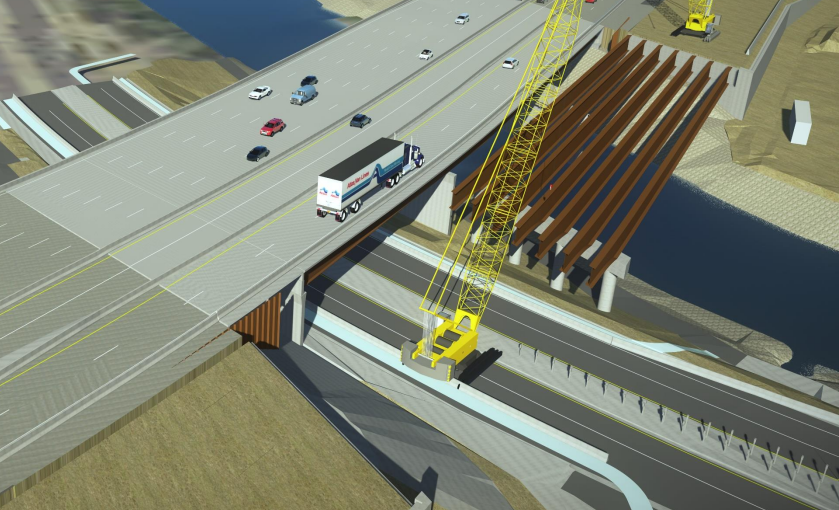
Innovation is essential to building infrastructure that can adapt to future needs.
Horrocks maintains a proactive approach by collaborating with technology partners, monitoring emerging research, participating in pilot programs, and staying engaged with industry trends.
New technologies—from advanced modeling and digital visualization to smart infrastructure systems and climate-adaptive design—are transforming how communities plan and manage their assets. These tools help leaders evaluate alternatives, reduce uncertainty, and maximize long-term value.
Additionally, collaborative delivery methods such as progressive design-build (PDB) and construction manager/general contractor (CMGC) streamline processes, reduce costs, and improve communication among stakeholders.
The Future of Community Infrastructure
The communities that thrive in the coming decades will be those that view infrastructure not as a reaction to growth, but as the foundation for it. By planning proactively, leveraging data-driven insights, and designing with flexibility in mind, local leaders can build infrastructure systems that support both today’s residents and future generations.


Comments